
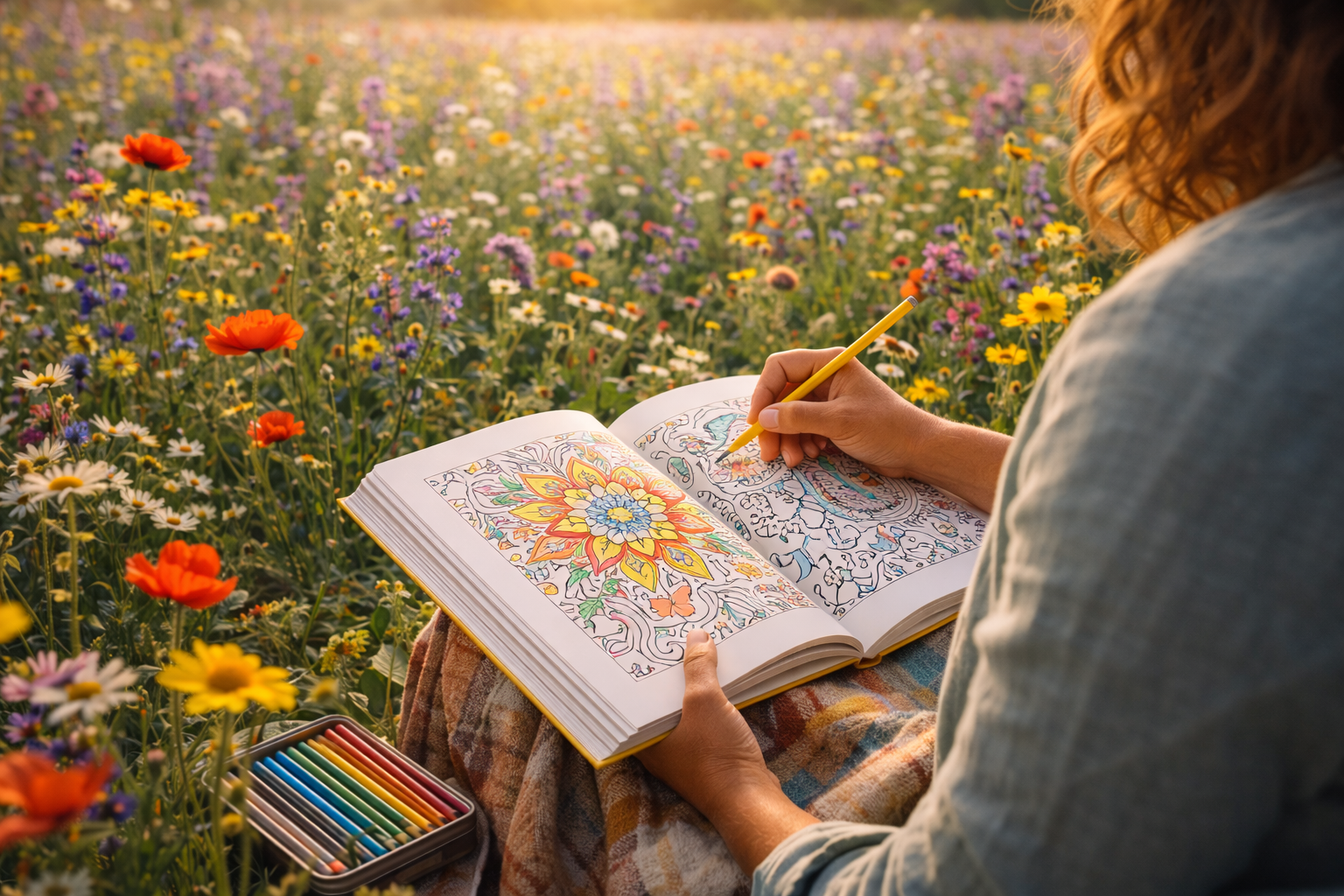
Color influences us in ways we don’t always notice. From the clothes we wear to the spaces we design, color quietly shapes how we feel, think, and respond to the world around us. While color preferences are personal, research and experience both suggest that certain colors consistently evoke emotional responses.
This is one reason coloring can be such a powerful wellness tool. Choosing colors intentionally allows us to support our emotional state, regulate stress, and create calm—one small decision at a time.
The Psychology Behind Color and Emotion
Color perception begins in the brain. When we see color, visual signals travel through the nervous system and interact with areas responsible for memory, emotion, and attention. This is why color can quickly influence mood—even without conscious awareness.
Some general emotional associations include:
- Blue: calm, stability, clarity
- Green: balance, restoration, comfort
- Yellow: energy, optimism, alertness
- Red: intensity, urgency, passion
- Purple: creativity, reflection, depth
While responses vary individually, these patterns appear consistently across cultures.
Why Color Choice Feels So Personal
Color is closely tied to memory and lived experience. A shade of blue may remind one person of the ocean and another of a childhood bedroom. These associations shape emotional responses in subtle but meaningful ways.
This personal connection is what makes coloring especially supportive: you’re not just choosing color—you’re responding to what feels right in the moment.
Coloring as Emotional Self-Regulation
Coloring offers a structured, low-pressure way to process emotion. When you select colors based on how you feel—or how you want to feel—you’re practicing emotional awareness and regulation at the same time.
For example:
- Soft tones may support calm after stress
- Bright colors may lift low energy
- Cool shades may reduce overstimulation
The process becomes both expressive and stabilizing.
Color and Stress Reduction
Color can also influence the nervous system physiologically. Cooler colors often slow breathing and heart rate, while warmer tones can increase alertness.
Coloring allows individuals to adjust their sensory environment gently—without needing external change.
Using Color Intentionally in Daily Life
You don’t need rules to benefit from color awareness, but small intentional choices can make a difference:
- Choose colors based on mood rather than habit
- Notice how certain combinations feel
- Slow down and enjoy the process
Over time, these small practices strengthen emotional insight and regulation.
Creativity as Emotional Awareness
Coloring doesn’t just calm the mind—it increases awareness of internal states. This awareness is a foundation of emotional well-being.
When we slow down enough to notice color choices, we often begin noticing ourselves more clearly.
Designed for Emotional Balance
At Sweet Pea Creative LLC, we believe creativity supports emotional wellness in simple, meaningful ways. Through PeaChi Pages, we design coloring books that encourage calm exploration, emotional awareness, and joyful expression.
Sometimes the most supportive question isn’t “What should I do?”
It’s simply: What color feels right today?


